Carpets through history
Stories & context
A starting point for exploring Persian carpets, weaving traditions and Persian history.
01 / Safavid Iran
Art for the court
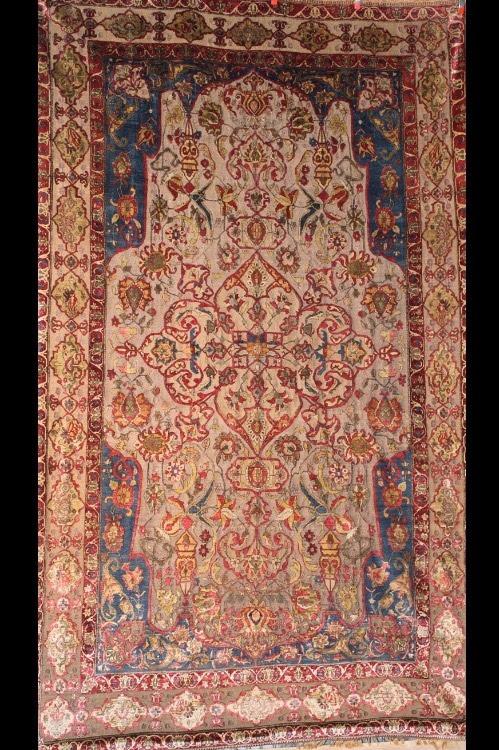
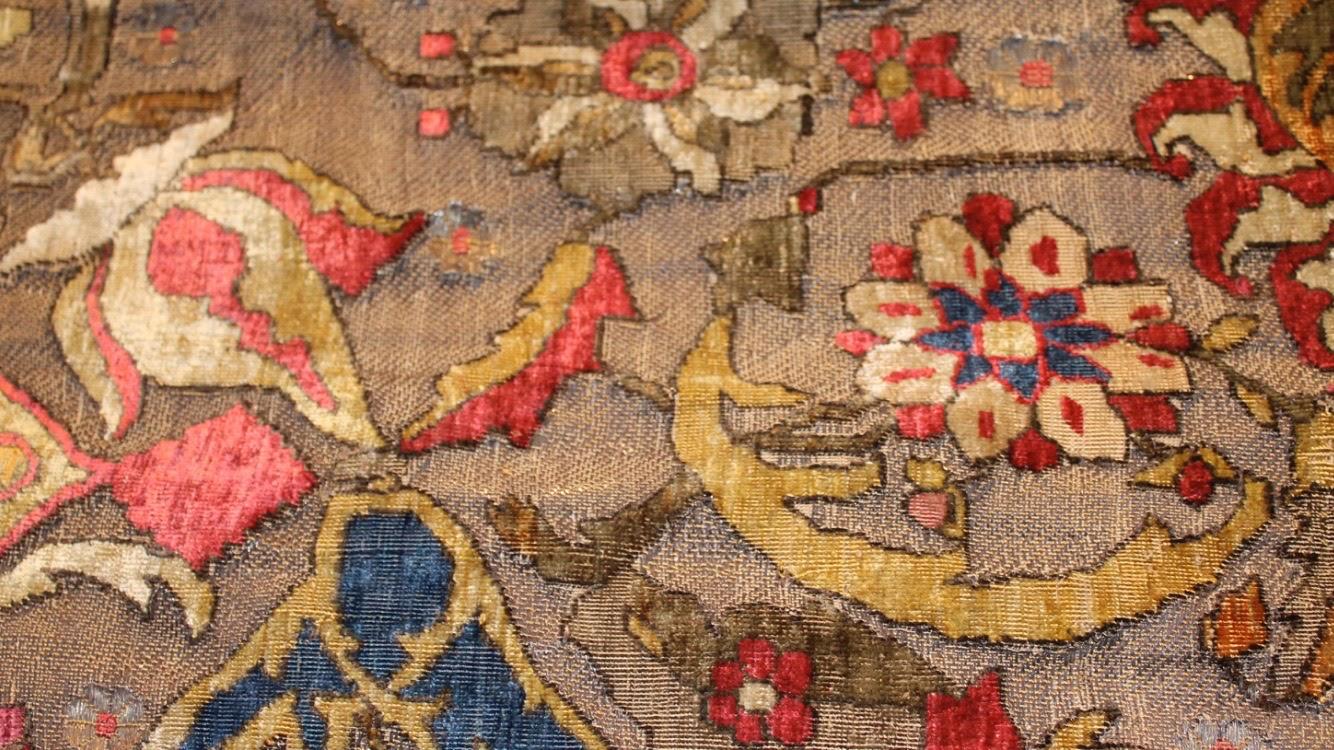
In sixteenth-century Iran, Safavid patronage encouraged ambitious carpet designs and complex techniques. Elaborate flowers, scrolling stems and carefully planned compositions connected weaving with the wider arts of the court.
The Met’s exhibition Carpets for Kings brings together six Iranian carpets from the sixteenth and seventeenth centuries. Most were made in royal workshops, showing how skilled weaving could become an expression of artistic prestige.
Further reading: The Metropolitan Museum of Art ↗
02 / 1539–1540
The Ardabil Carpet
An inscription dates this celebrated carpet to 1539–1540. Now in the Victoria and Albert Museum, it is believed to have been commissioned for the shrine of Shaykh Safi al-Din in Ardabil, although its precise origins remain uncertain.
A great central medallion anchors its design. Two hanging lamps, different in size, invite close looking; their meaning remains debated. Its dense wool pile allowed the weavers to render exceptionally intricate ornament.
Further reading: Victoria and Albert Museum ↗
03 / Across borders
Patterns on the move
Ottoman, Safavid and Mughal courts supported weaving on a grand scale. Trade carried carpets to Europe and the Far East, where valuable examples could furnish tables and walls as well as floors.
Designs travelled too. Ottoman court carpets adopted central medallions and flowing vegetation, while Mughal workshops developed distinctive floral styles. Regional traditions continued alongside these court fashions, making carpet history a story of both exchange and local identity.
Further reading: The Metropolitan Museum of Art ↗