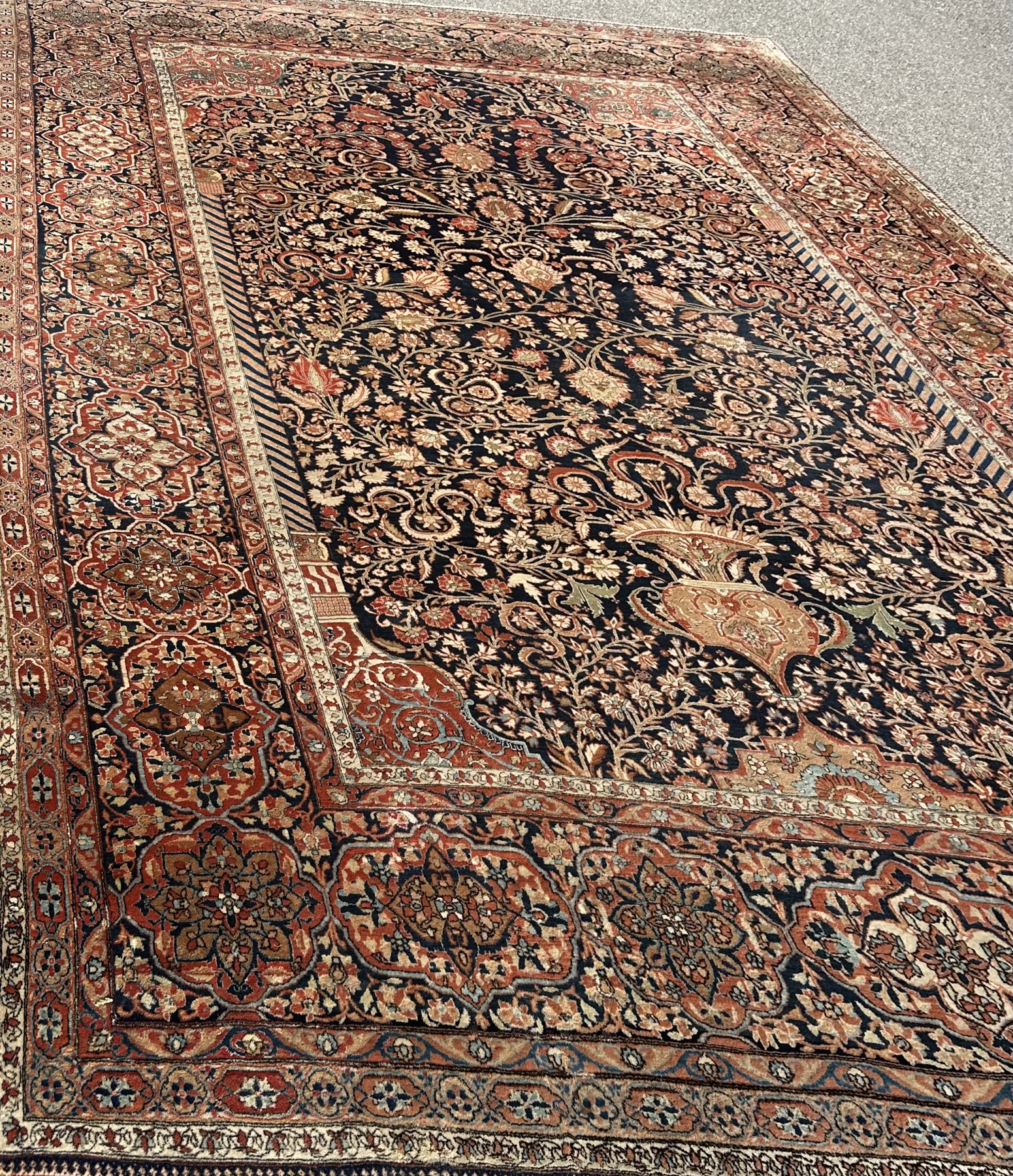
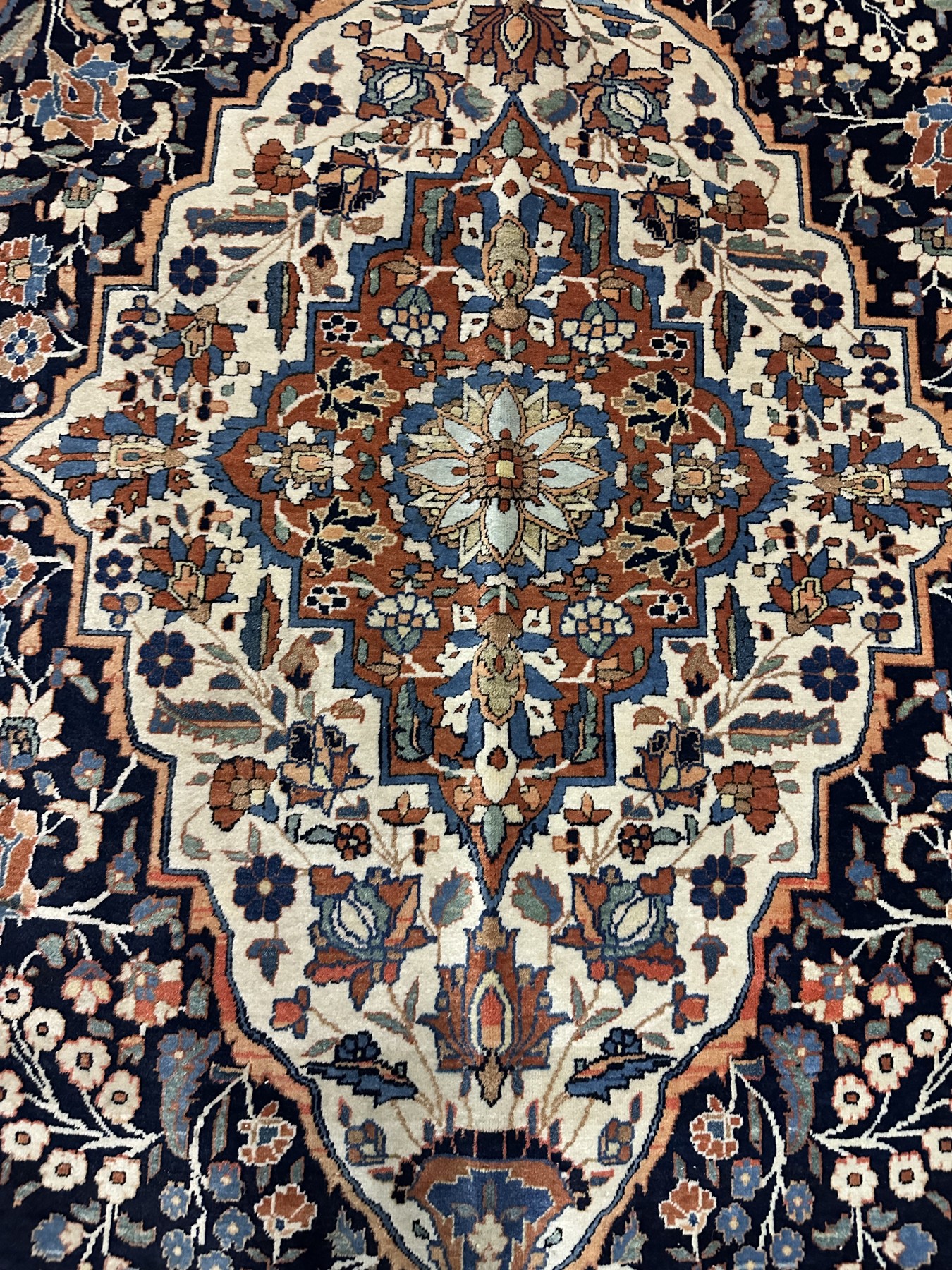
Shahrokh TabriziCarpets

History · Craft · Culture

The stories
woven into carpets.

Discover the art of carpets: the cultures that shaped them, the patterns that reward a closer look, and the craftsmanship that connects generations. Explore carpet history

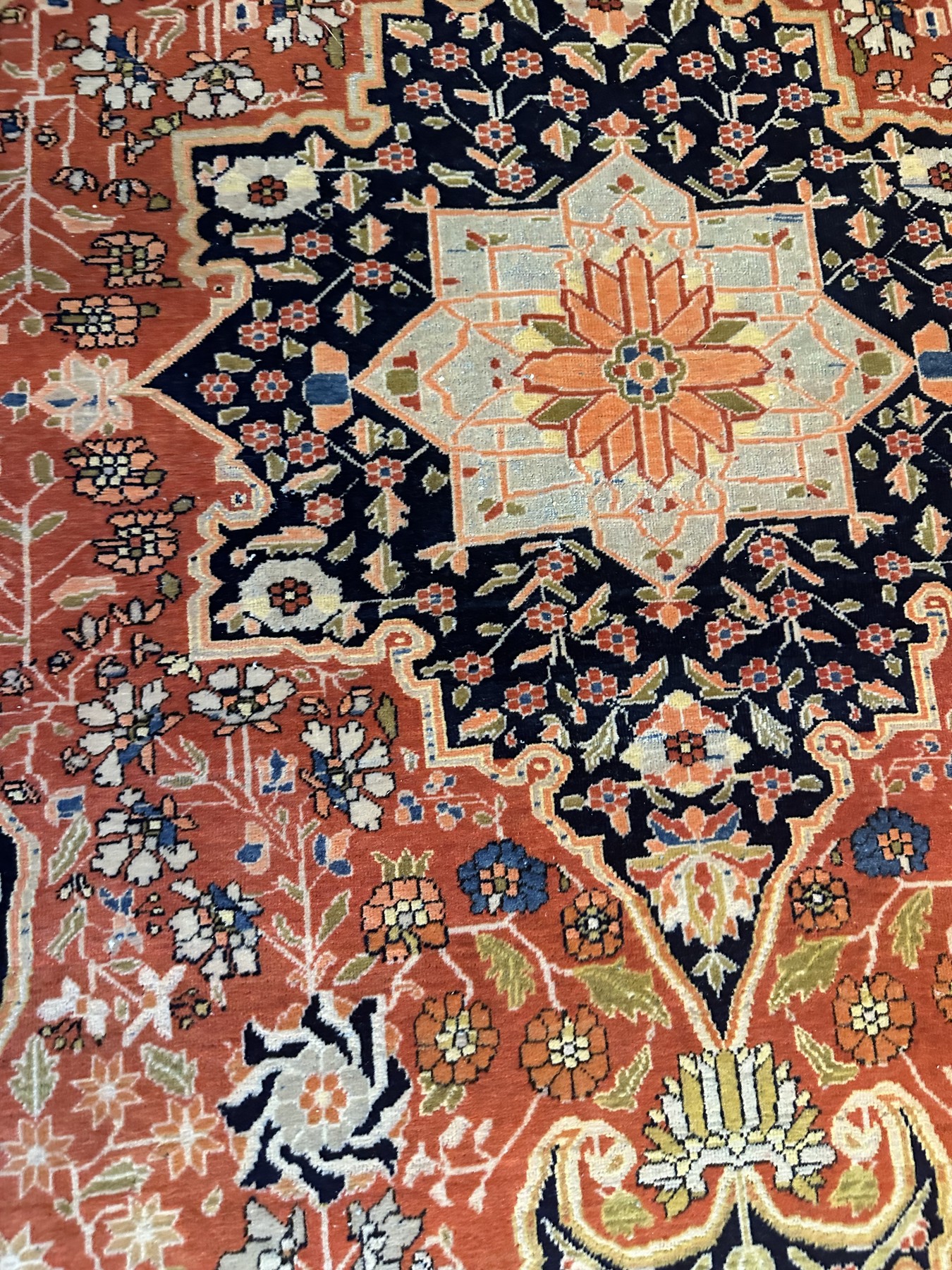
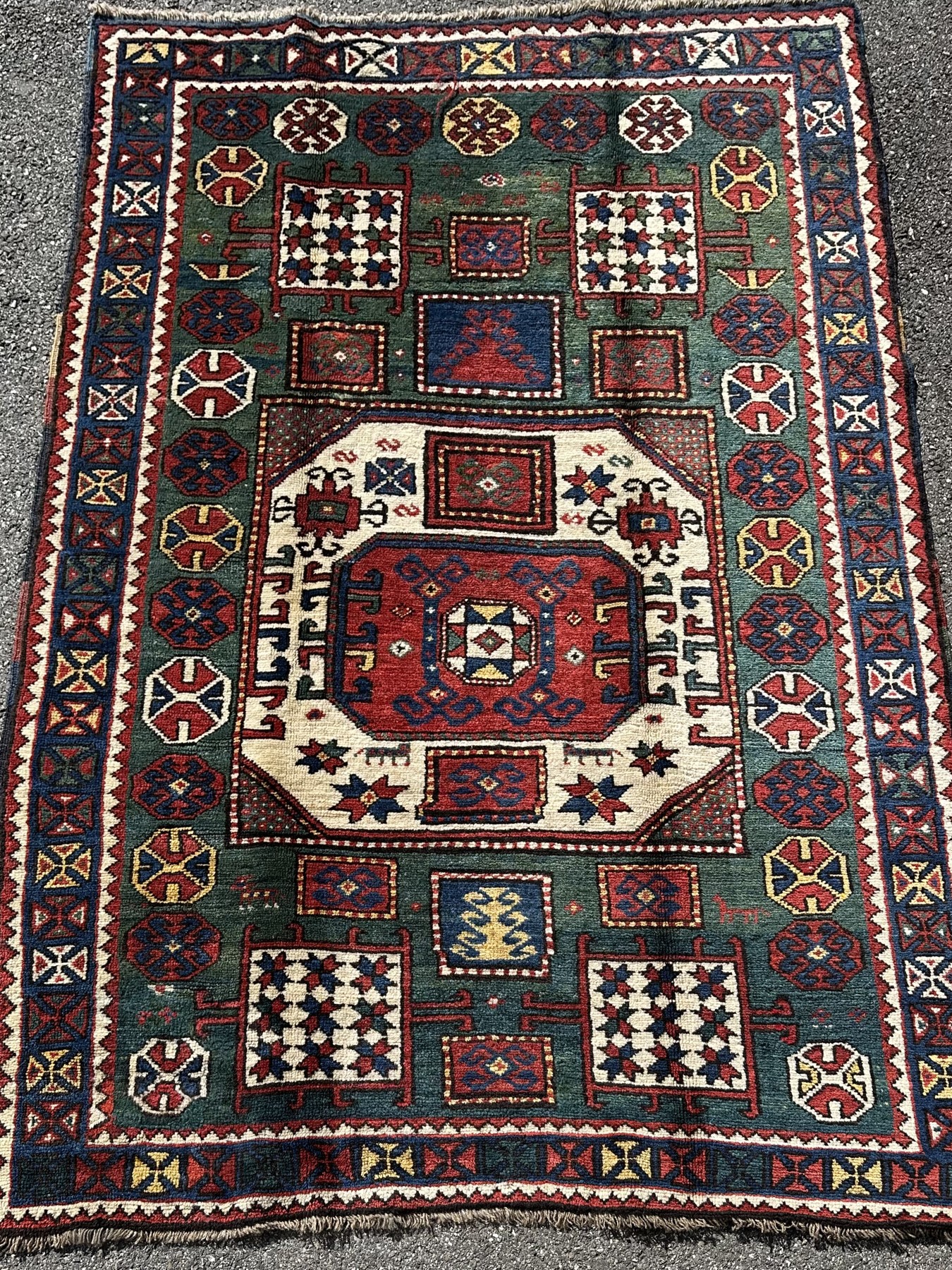
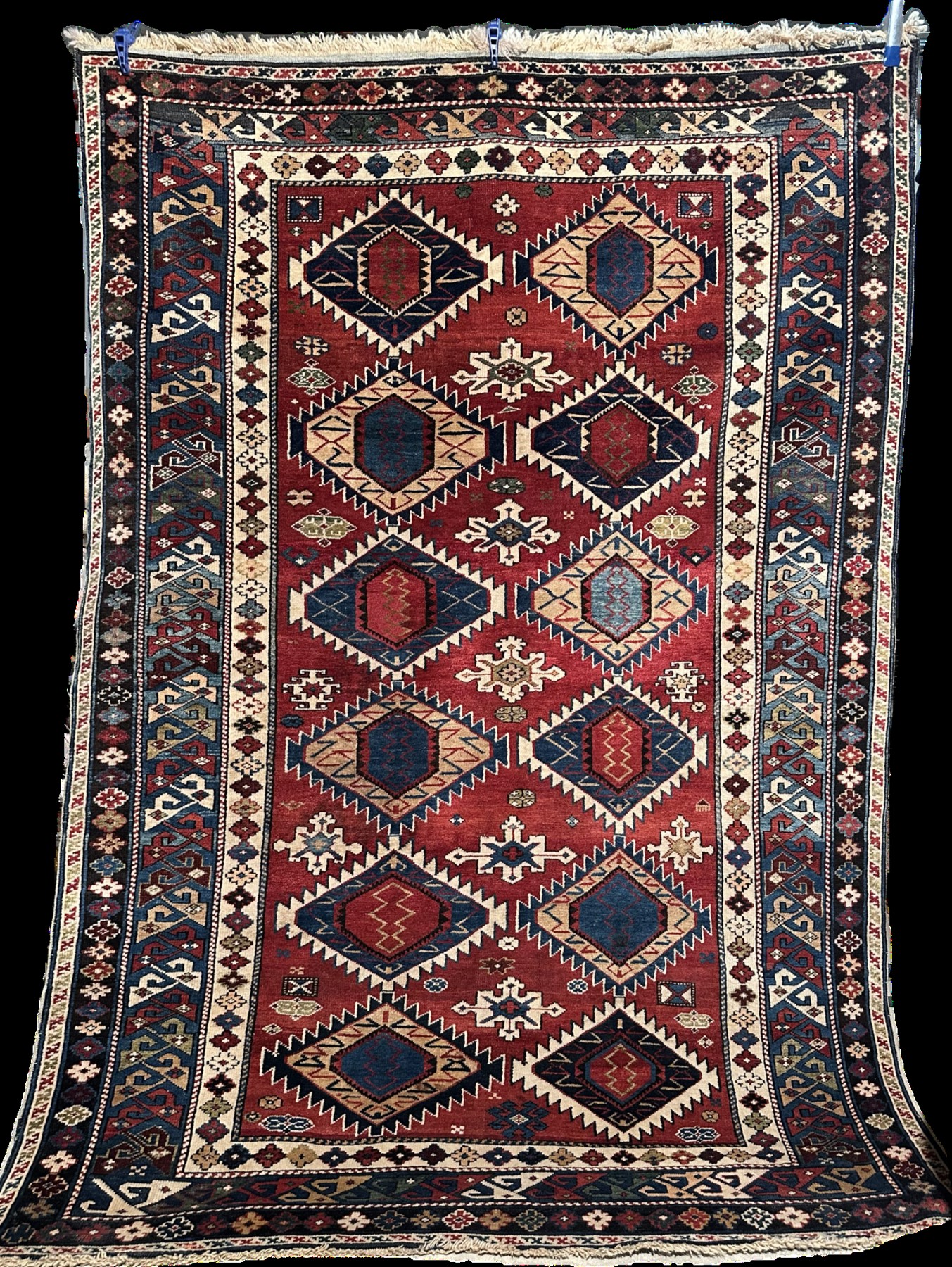
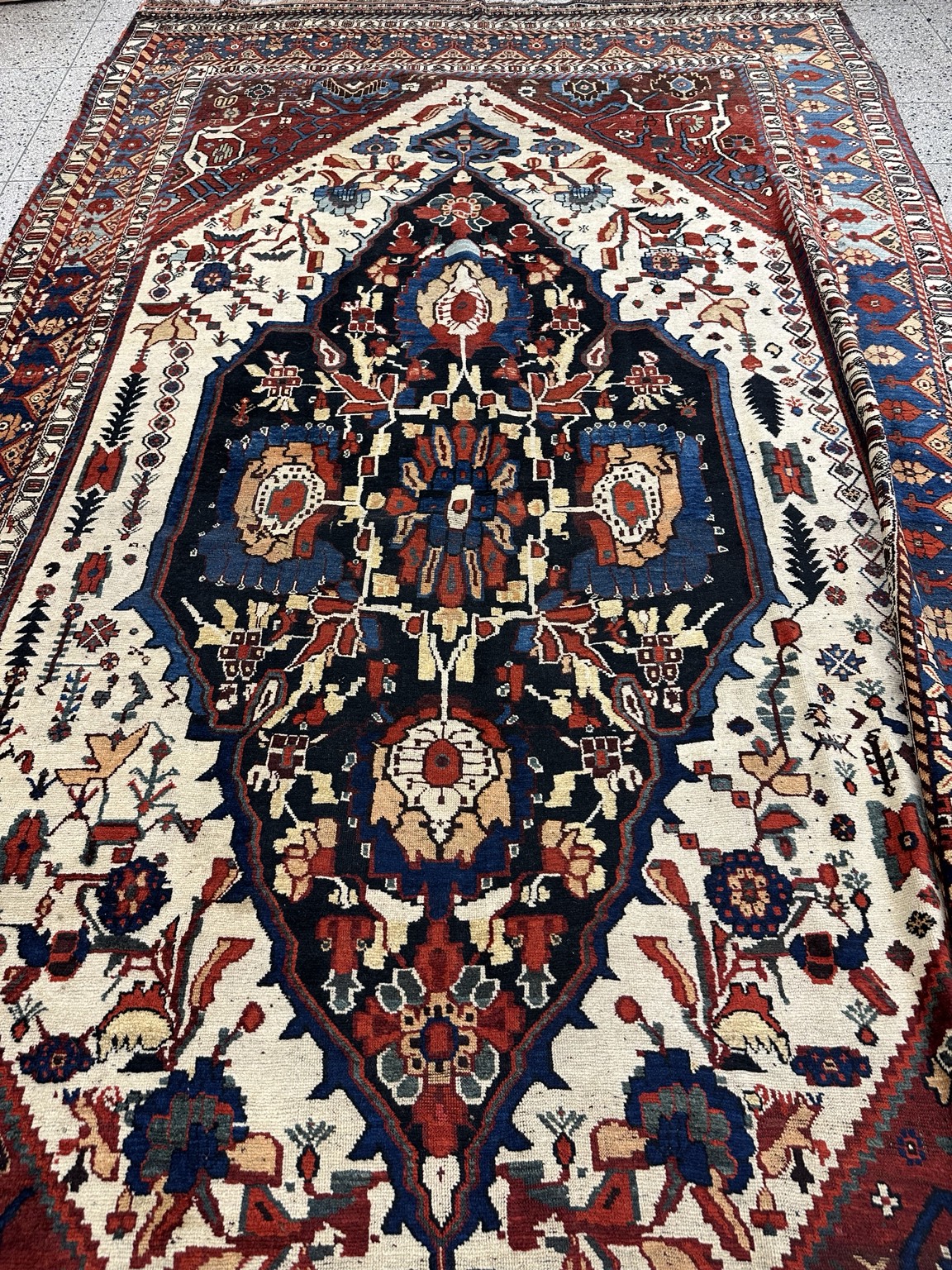
Antique Ghashghai wool rug with geometric designs, a dark blue central medallion, ivory field and red border
Antique Ghashghai Rug

Woven by the nomadic Ghashghai tribe, this antique rug combines natural wool and natural dyes with beautiful geometric designs.

From our private collection.

Carpets through history

Stories & context

A starting point for exploring Persian carpets, weaving traditions and Persian history.

01 / Safavid Iran

Art for the court

In sixteenth-century Iran, Safavid patronage encouraged ambitious carpet designs and complex techniques. Elaborate flowers, scrolling stems and carefully planned compositions connected weaving with the wider arts of the court.

The Met’s exhibition Carpets for Kings brings together six Iranian carpets from the sixteenth and seventeenth centuries. Most were made in royal workshops, showing how skilled weaving could become an expression of artistic prestige.

Further reading: The Metropolitan Museum of Art ↗

02 / 1539–1540

The Ardabil Carpet

An inscription dates this celebrated carpet to 1539–1540. Now in the Victoria and Albert Museum, it is believed to have been commissioned for the shrine of Shaykh Safi al-Din in Ardabil, although its precise origins remain uncertain.

A great central medallion anchors its design. Two hanging lamps, different in size, invite close looking; their meaning remains debated. Its dense wool pile allowed the weavers to render exceptionally intricate ornament.

Further reading: Victoria and Albert Museum ↗

03 / Across borders

Patterns on the move

Ottoman, Safavid and Mughal courts supported weaving on a grand scale. Trade carried carpets to Europe and the Far East, where valuable examples could furnish tables and walls as well as floors.

Designs travelled too. Ottoman court carpets adopted central medallions and flowing vegetation, while Mughal workshops developed distinctive floral styles. Regional traditions continued alongside these court fashions, making carpet history a story of both exchange and local identity.

Further reading: The Metropolitan Museum of Art ↗
Learning to look

A closer reading

Use these questions as you explore the photographs below. Looking carefully is the first step towards understanding a carpet.

Composition

Follow the pattern

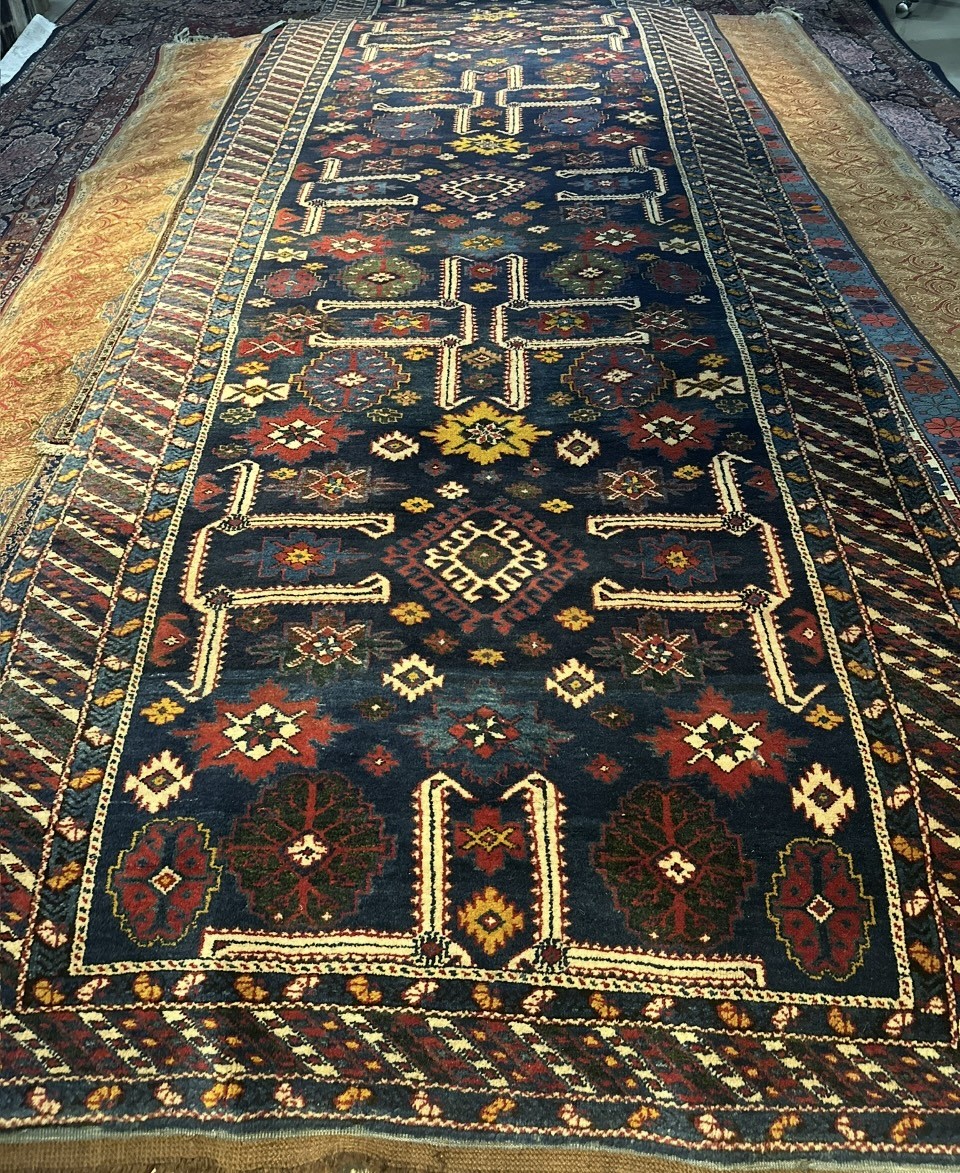
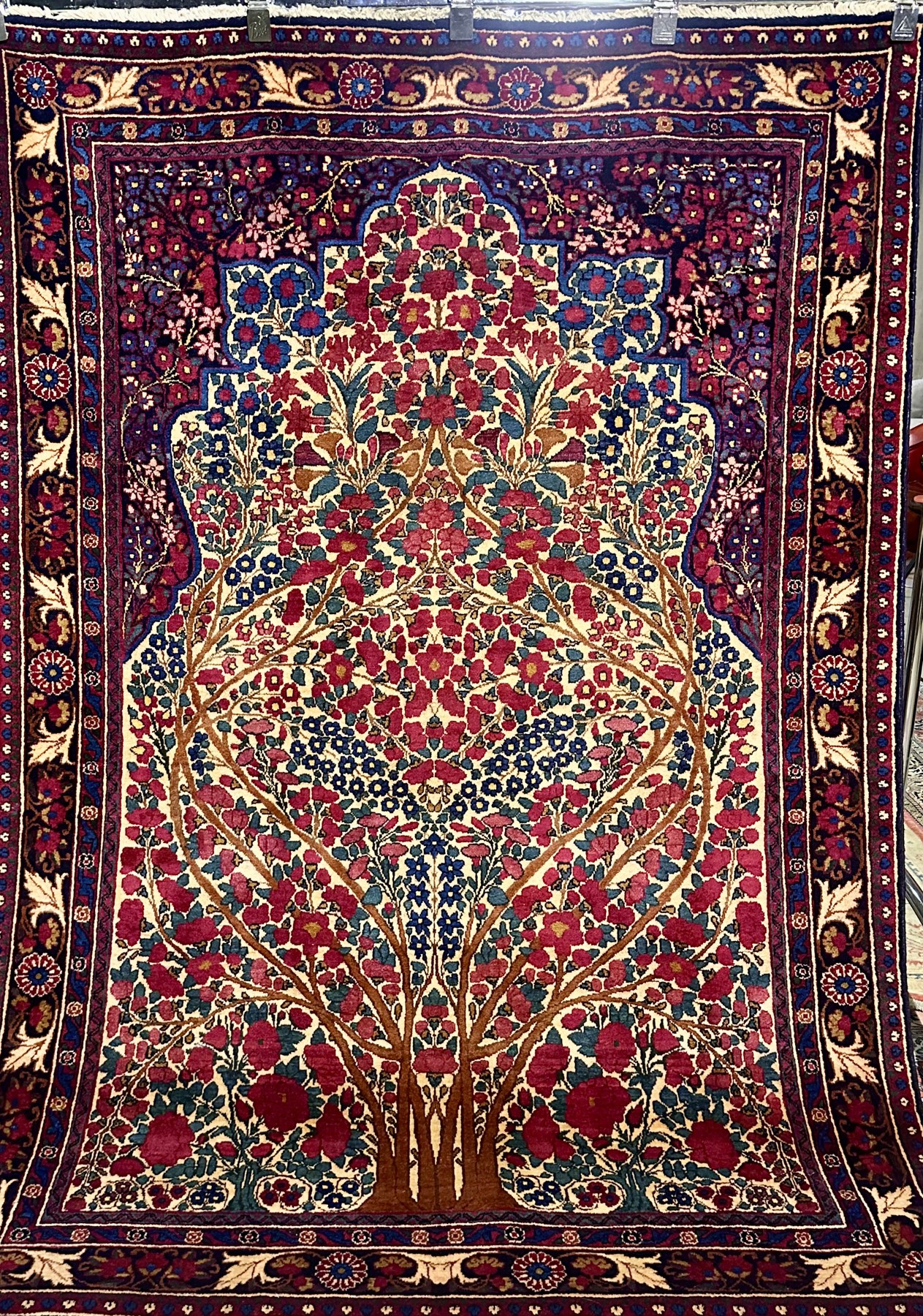
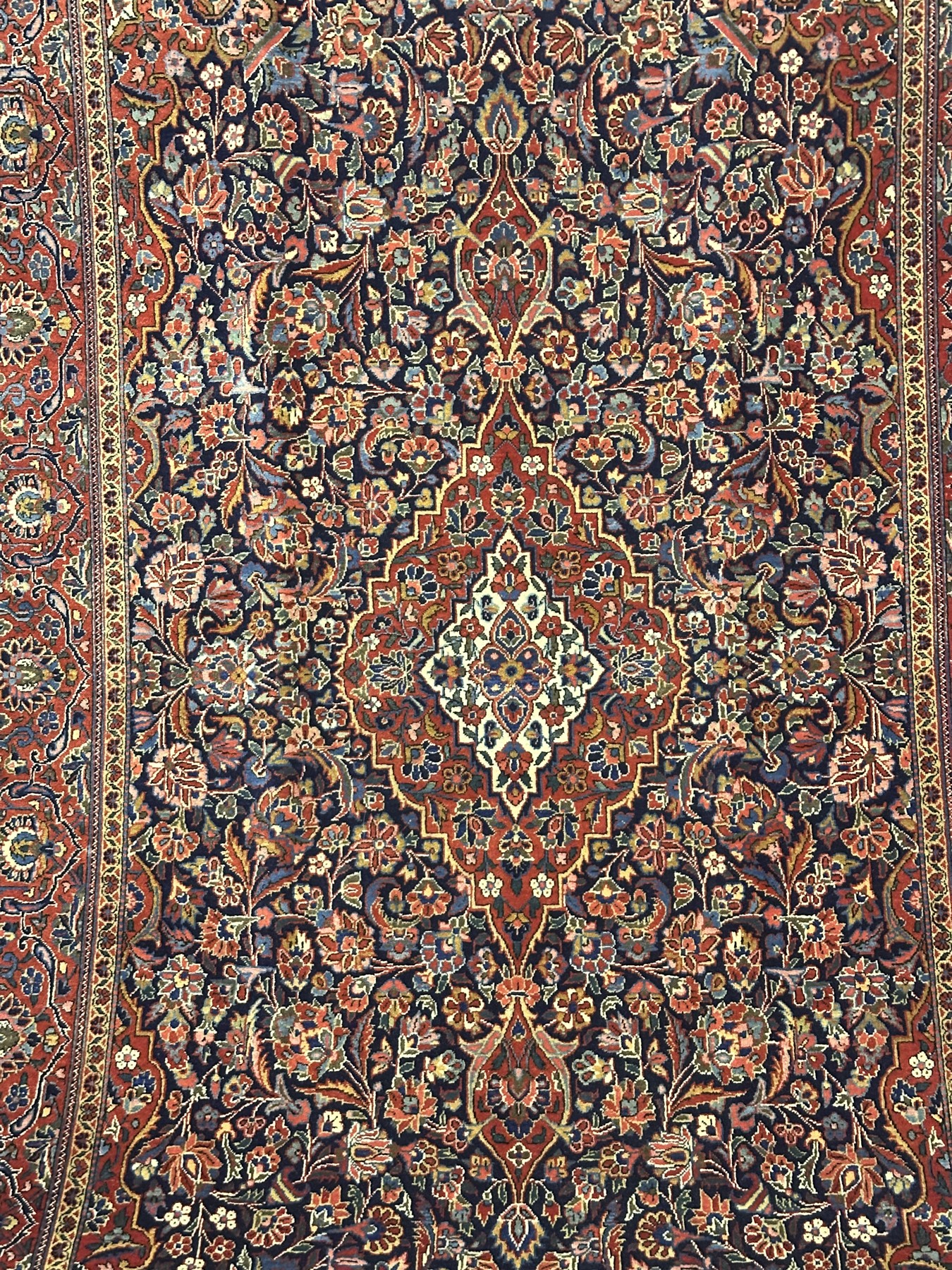
Start at the centre and move outwards. Is the design organised around one medallion, repeated across the field, or divided into compartments? Notice how the borders frame the main design, and whether the corners echo its centre.

Study the collection

Colour & detail

Look beyond the first impression

Compare the dark and light areas, then look at individual motifs. Which colours repeat? Are the forms angular or curving? The collection offers geometric, floral and allover compositions to compare side by side.

A photograph is a useful introduction; lighting and screen settings can change the colours you see.

Attribution

Ask what the evidence tells us

A pattern alone does not establish a carpet’s age or origin. Scholars also examine materials, dyes and weaving structure. Historical records and comparisons with documented examples help build an attribution.

Collection identifications and dates are supplied by Shahrokh Tabrizi. Photographs offer a starting point for study; a full attribution also draws on examination and documentation.

Read about attribution at The Met ↗

Watch & discover

Museum films

Video selections will be added here.

Selected carpets

Photographic collection
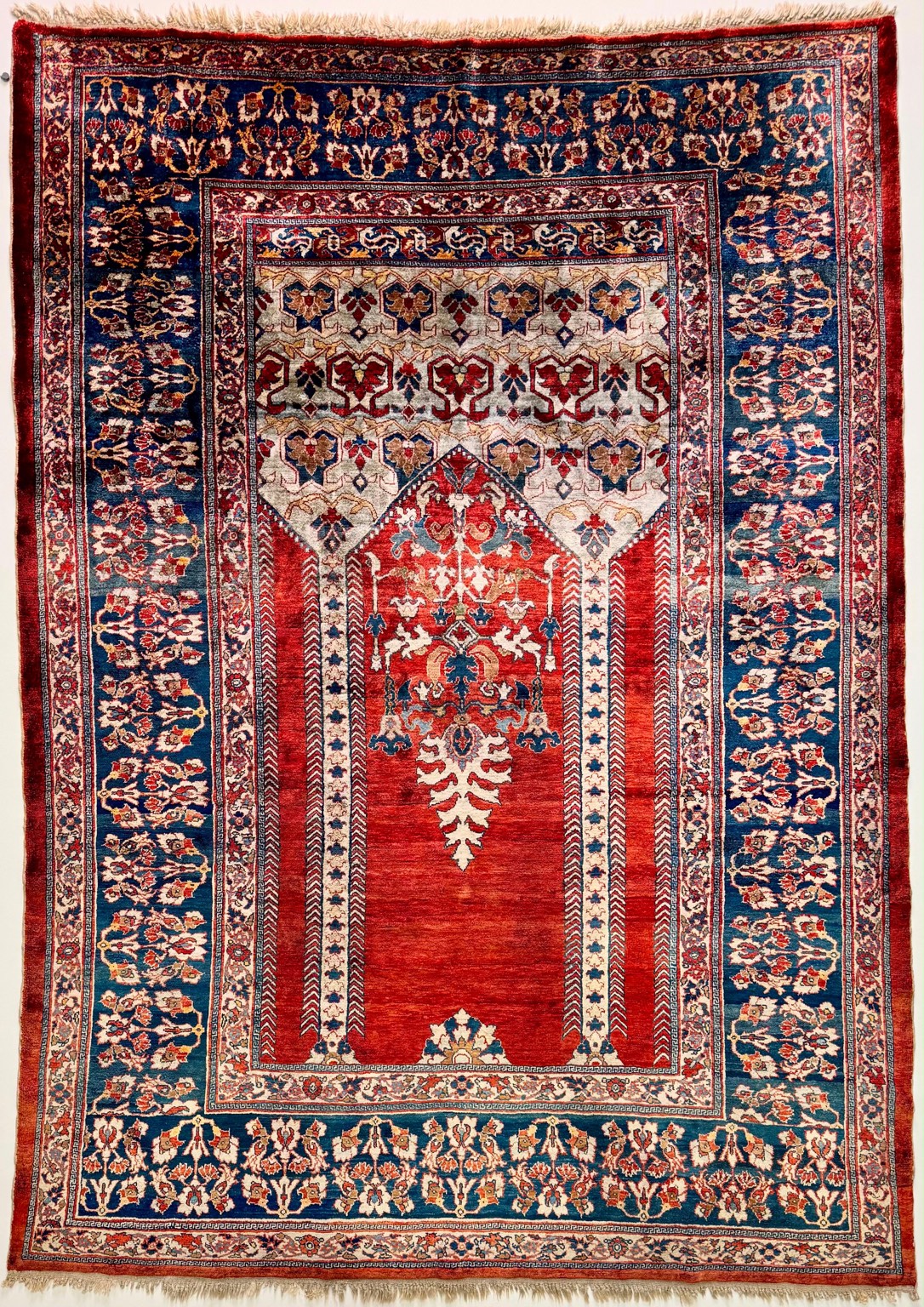
Antique Persian silk Heriz with a red prayer-niche field, ivory arch and deep blue floral borders

A carpet in focus

Antique Persian Silk Heriz

Persia · circa 1890–1900 · Silk

From our private collection.

A luminous red field rises into a pointed, prayer-niche composition. An ivory arch filled with stylised flowers frames the upper section, while a pendant floral motif extends down into the red ground.

A broad, deep blue border carries repeating floral forms in ivory, red and gold tones. Narrow patterned bands separate the field from the border, giving the composition its distinctive architectural rhythm.

Look closely at the balance between the open red field and the densely ornamented borders: each gives the other greater presence.

Identification and dating supplied by Shahrokh Tabrizi.

View full photograph ↗
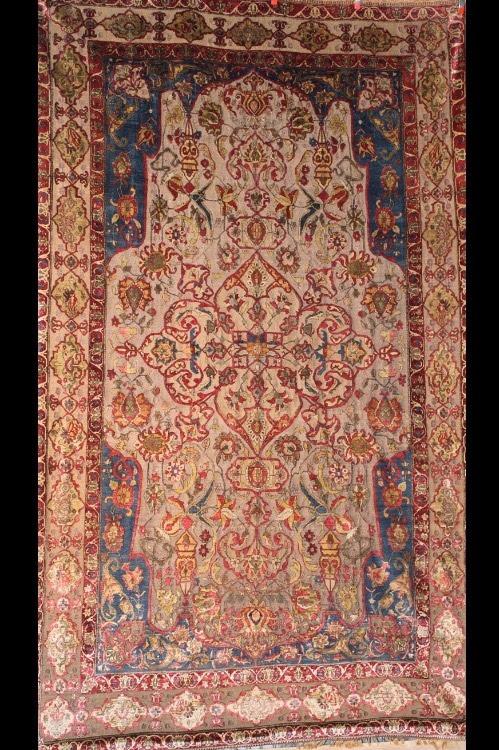
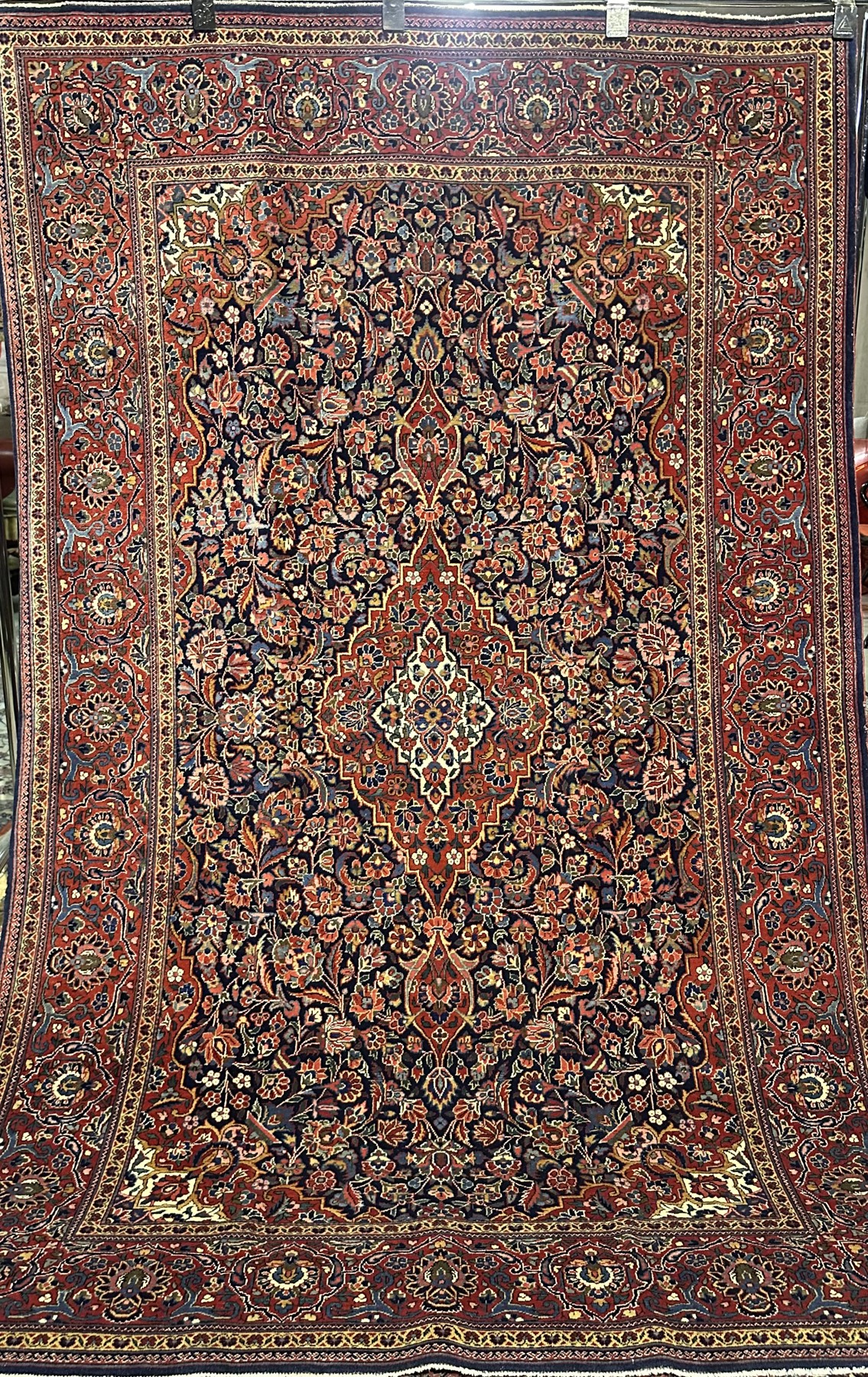
19th-century Persian Souf Kashan with an ornate floral medallion, pale ground and deep blue accents

A carpet in focus

Antique Persian Souf Kashan

Persia · 19th century · Silk and metal threads

A perfect example of Persian master craftsmanship.

An elaborate central medallion anchors a composition of curling stems, flowers and palmettes. Reds, pinks, ivory and gold tones contrast with deep blue areas around the pale central field.

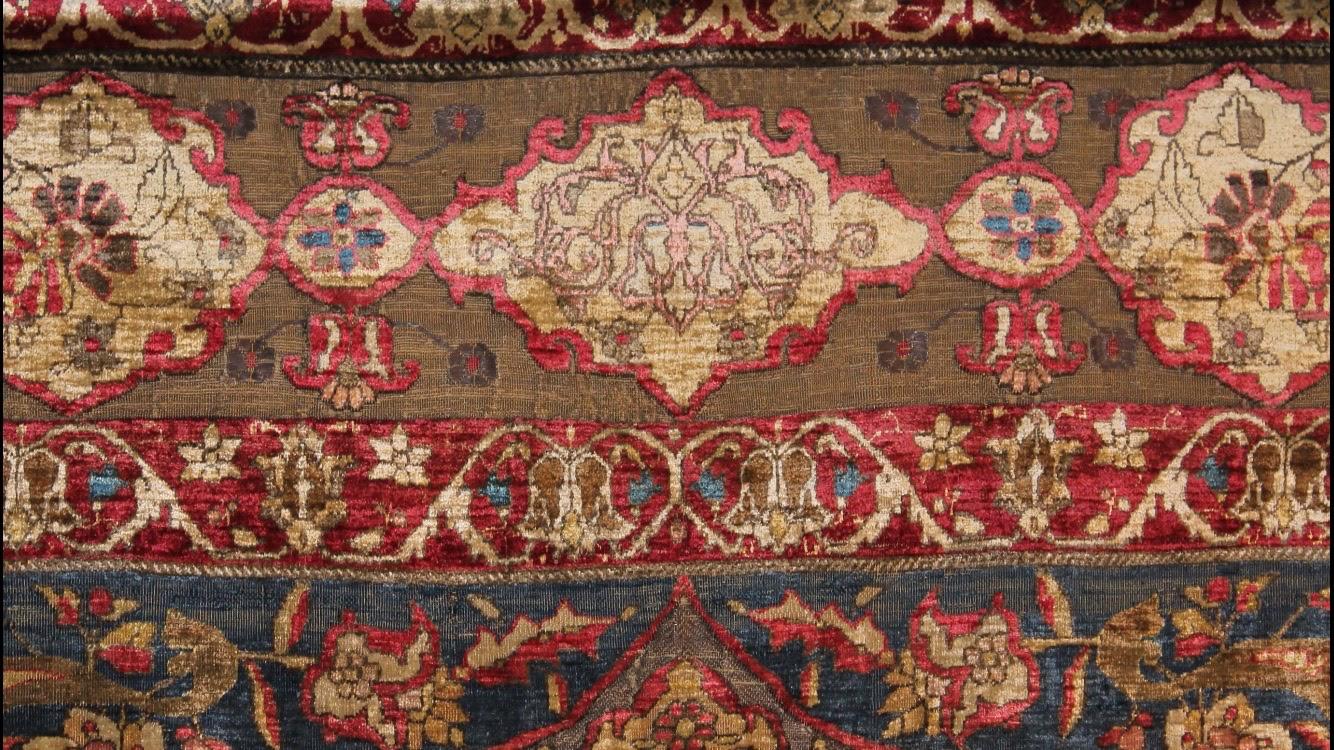
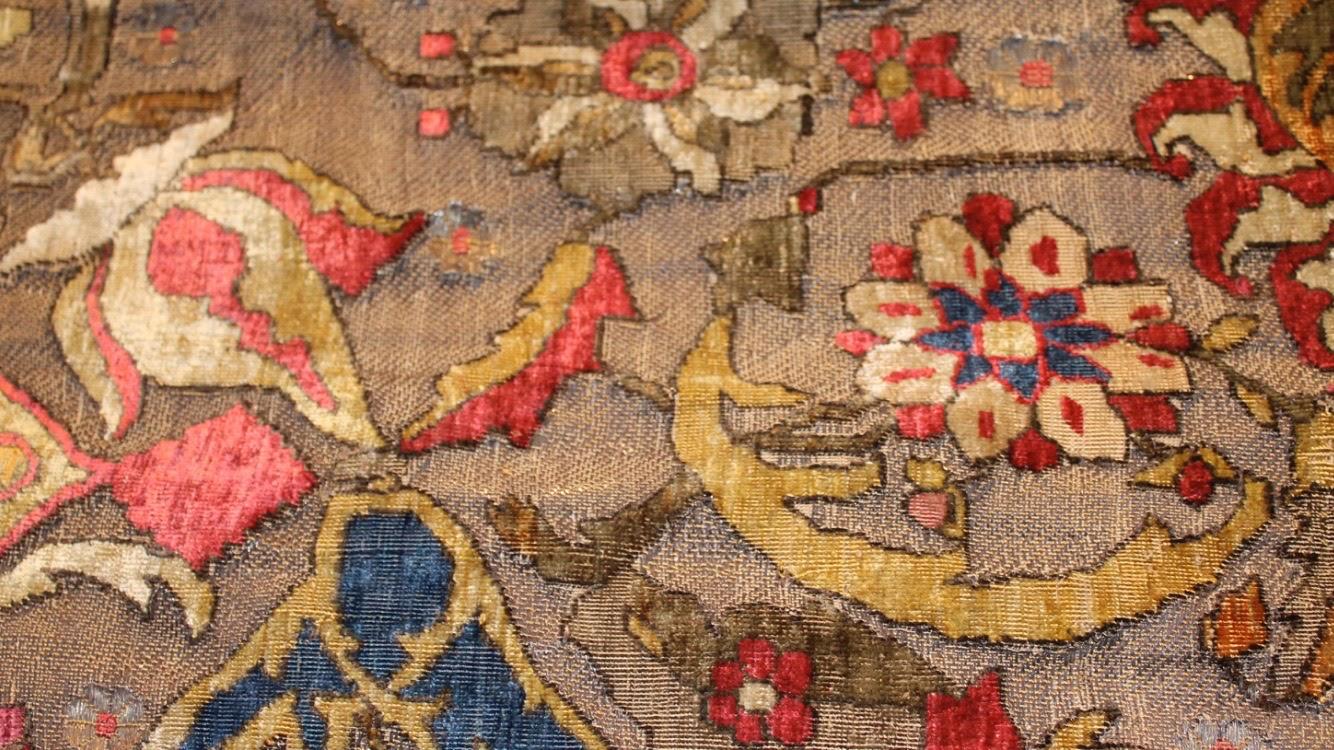
The close-up photographs reveal the textured ground, lustrous threads and finely worked floral details.

Identification, dating and materials supplied by Shahrokh Tabrizi.

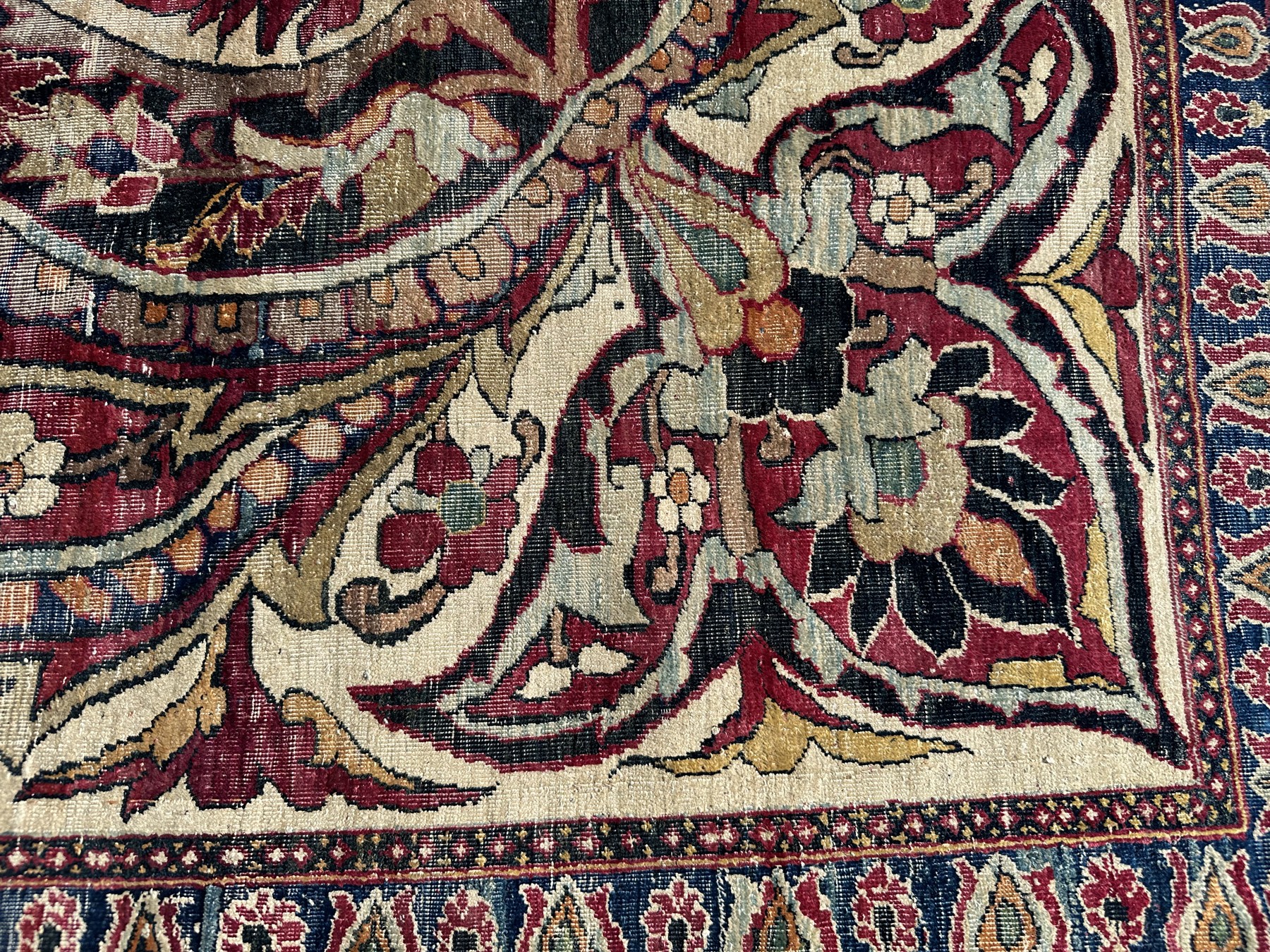
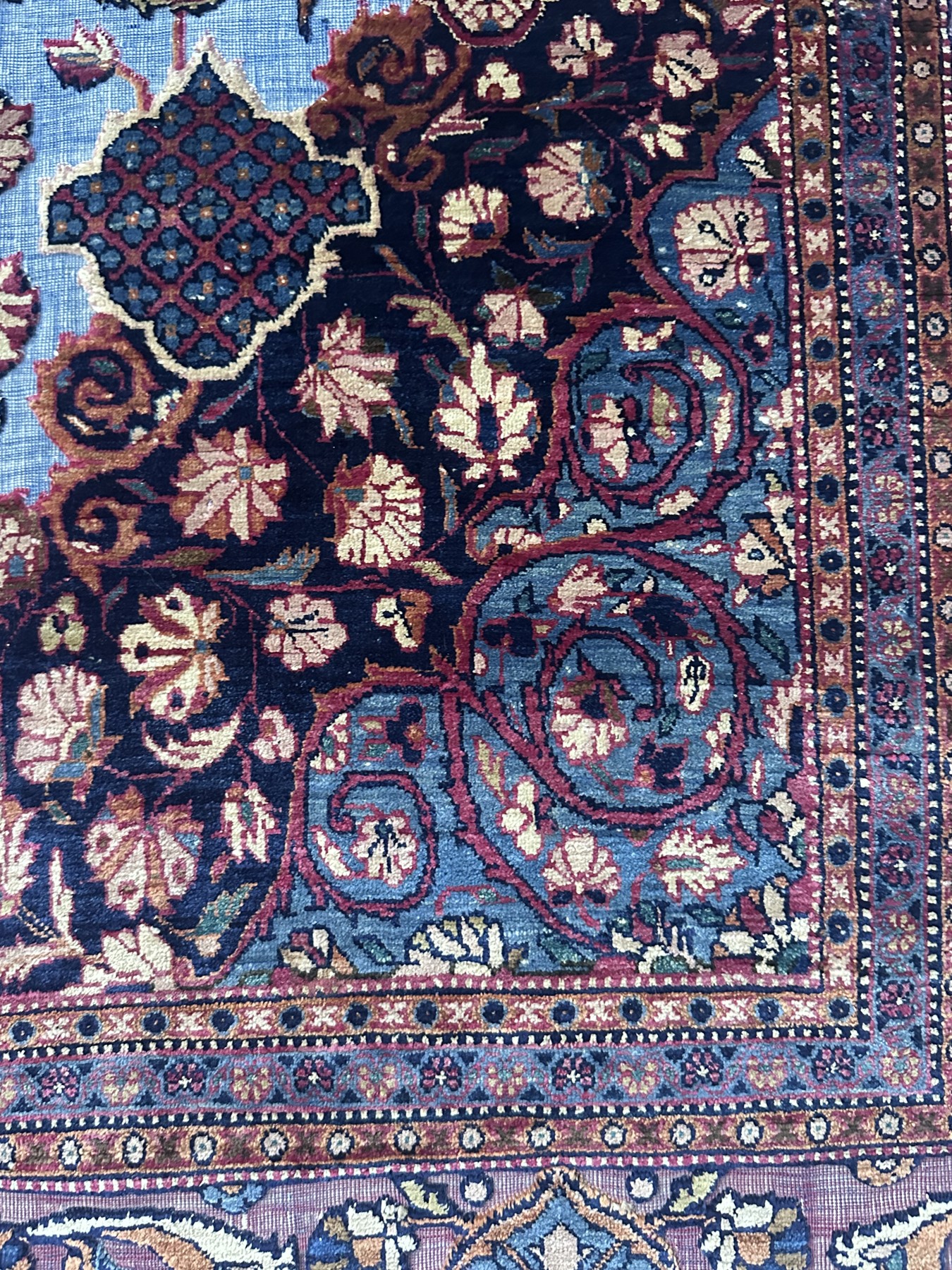
Souf Kashan border detail with floral cartouches and red scrolling vines
Border detail
Close-up of the Souf Kashan showing silk and metal threads in the floral design
Silk and metal thread detail
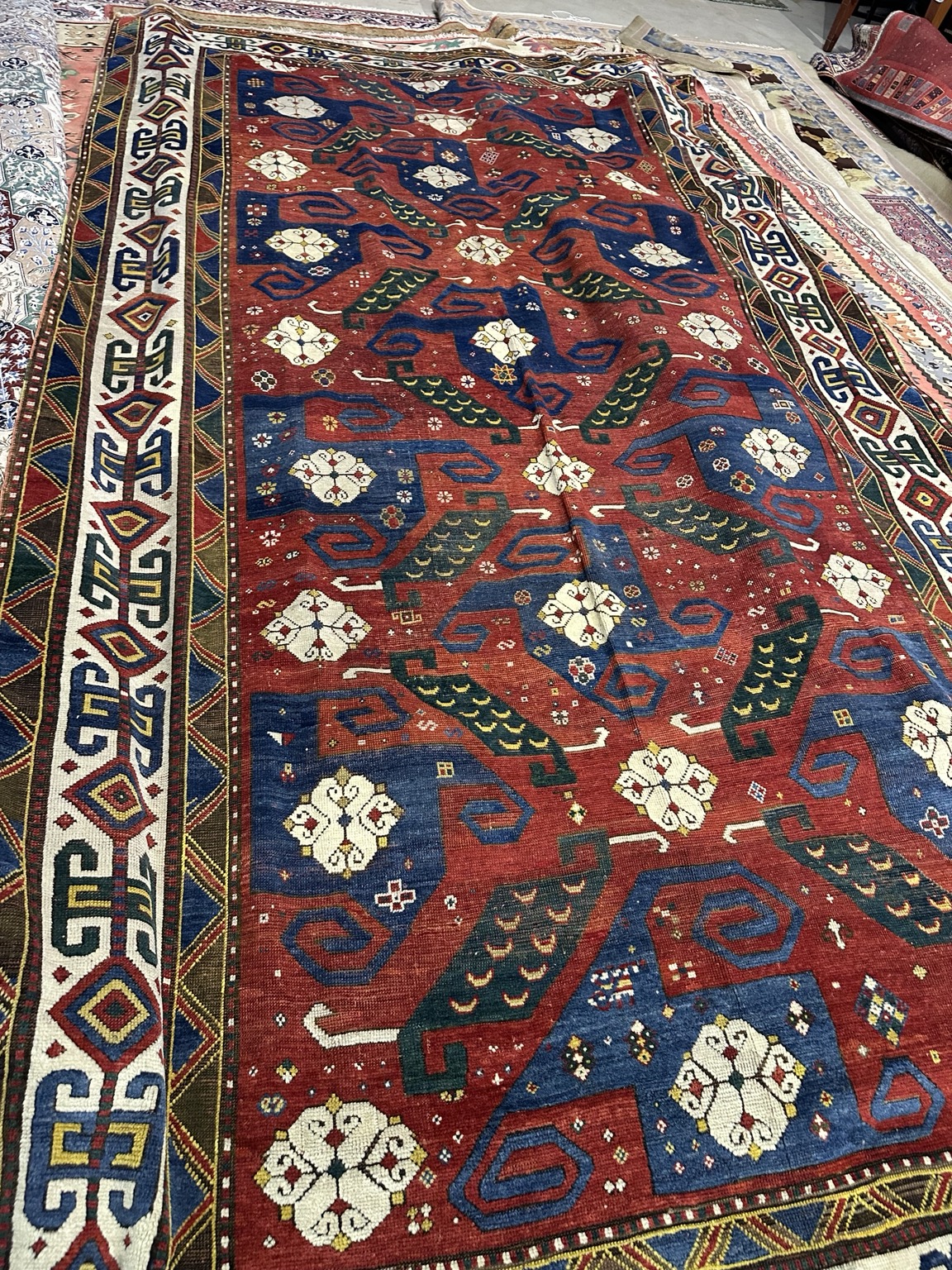
Antique 19th-century Caucasian Pinwheel rug with blue and green geometric motifs, ivory rosettes and an ivory border on a red field
Antique Caucasian “Pinwheel” Rug

Caucasus · 19th century

From our private collection.

Bold blue and green geometric motifs sweep across a rich red field, interspersed with ivory floral rosettes and small decorative details. A contrasting ivory border frames the lively design.

02
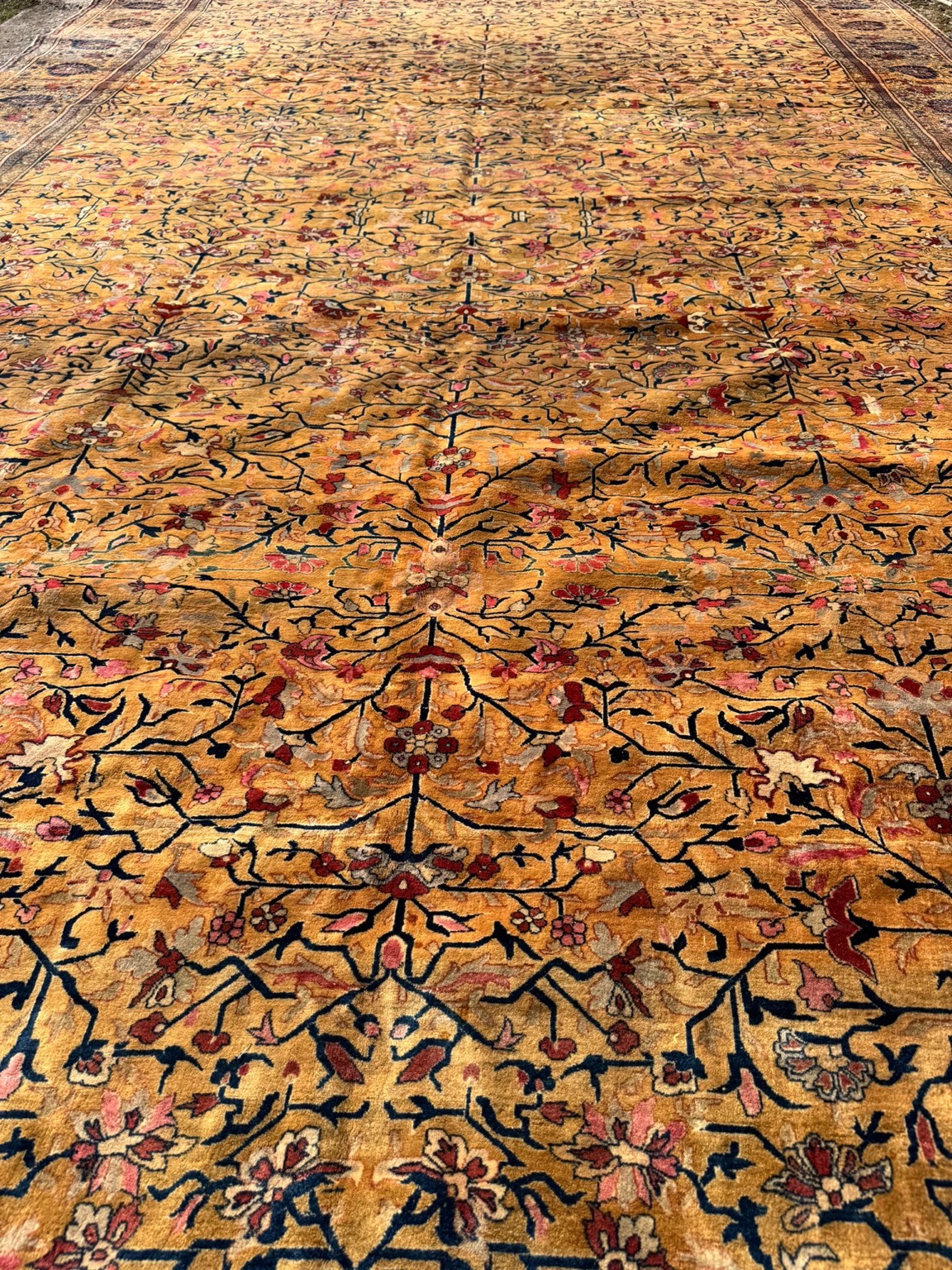
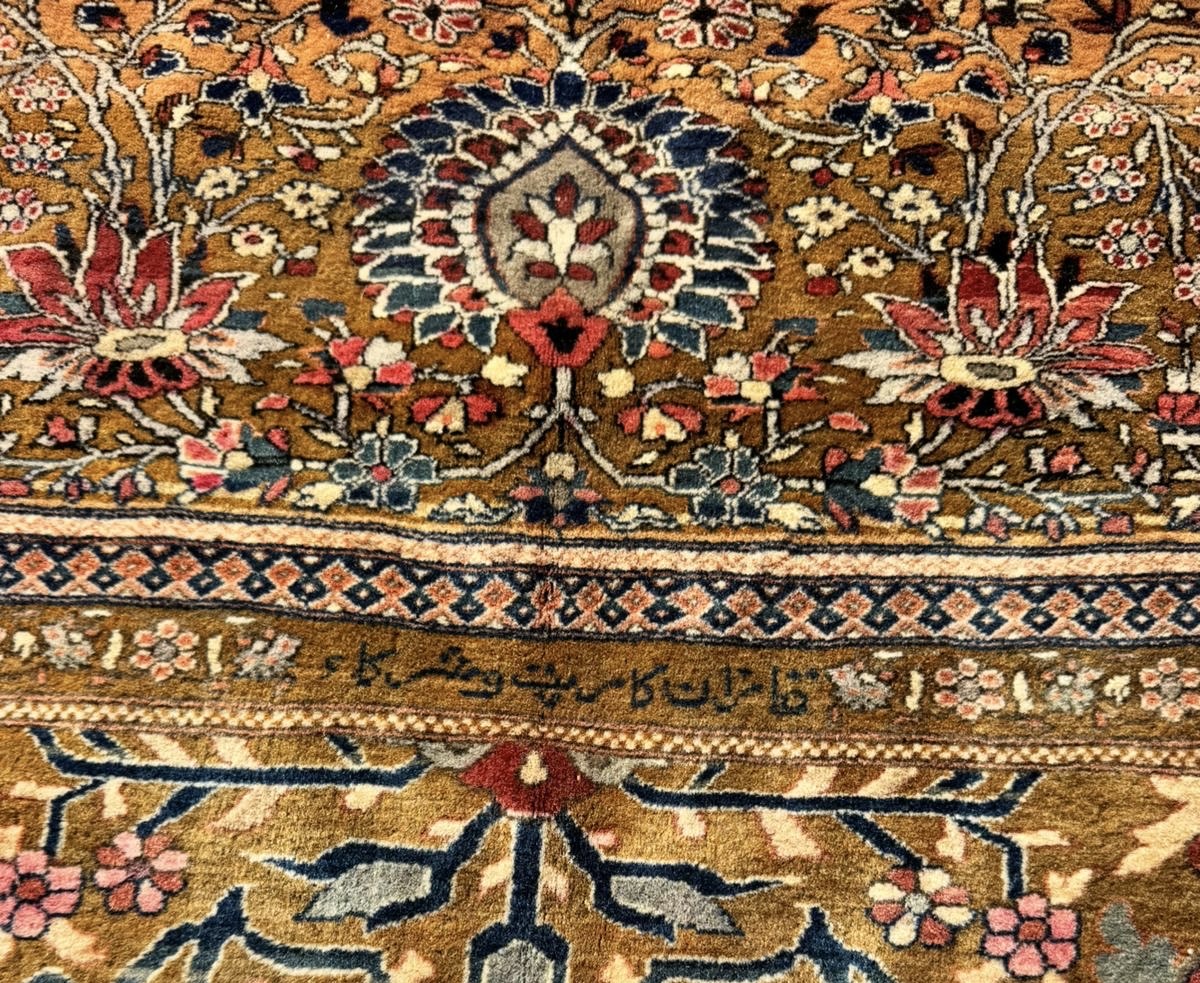
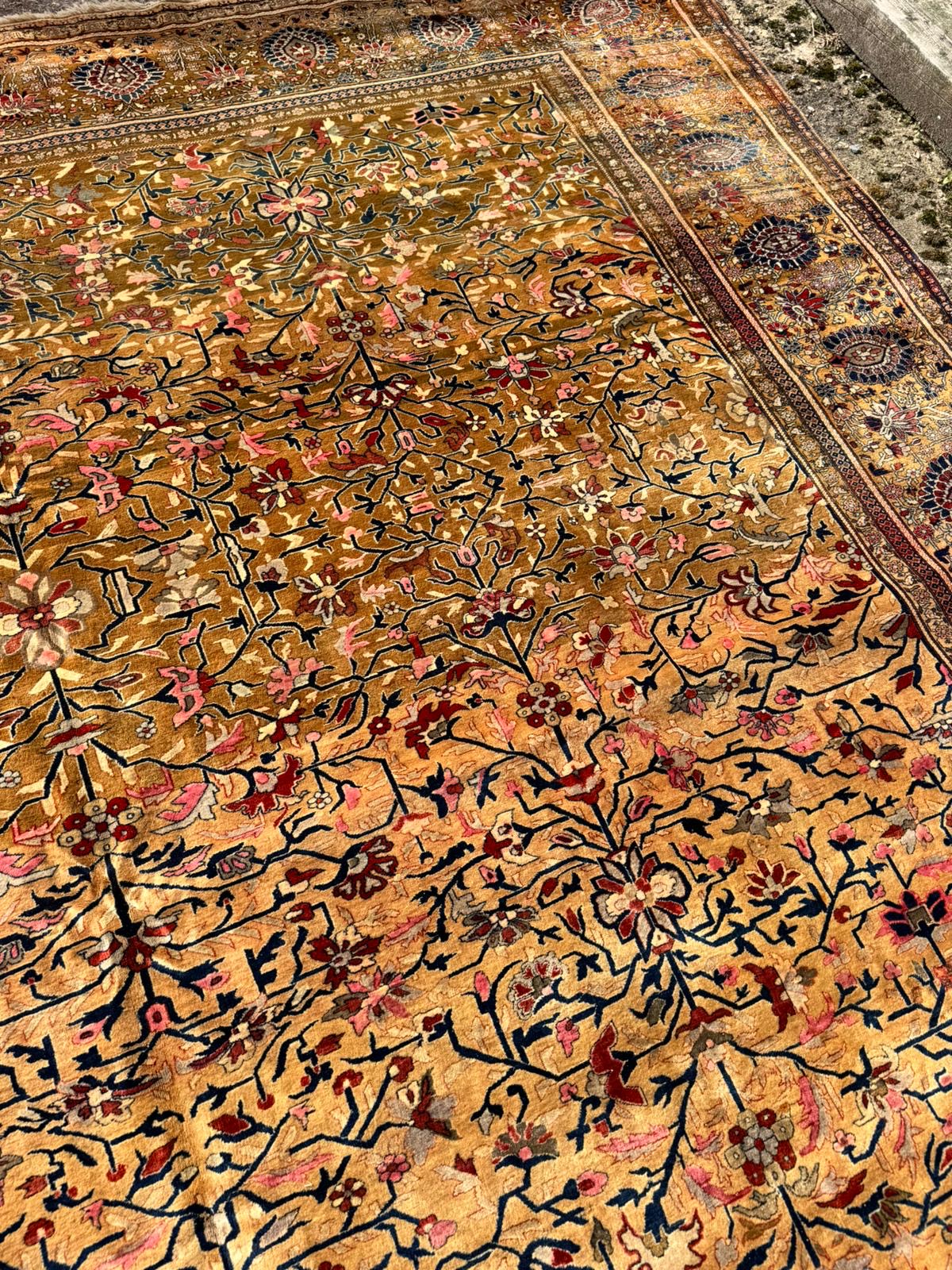
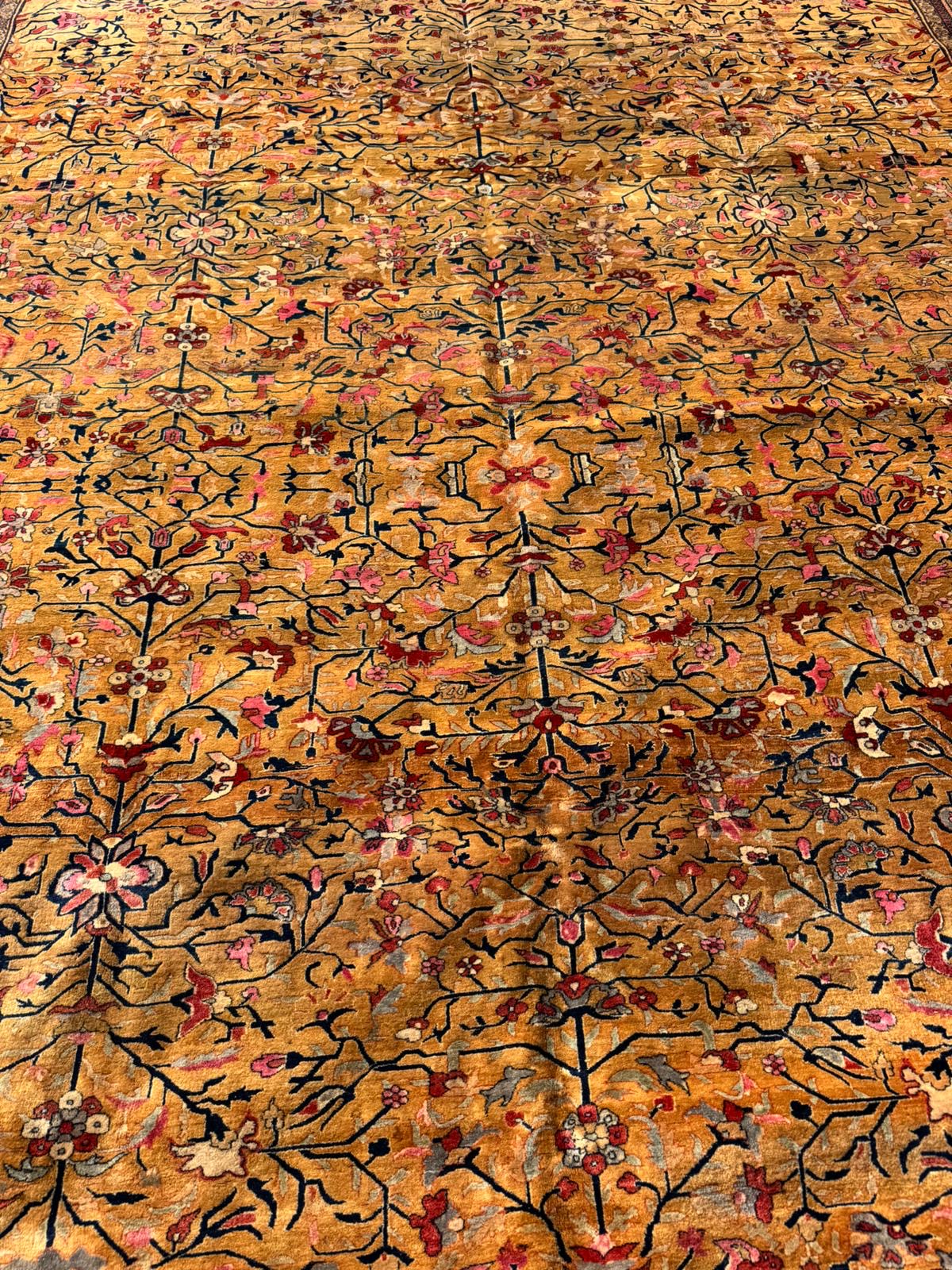
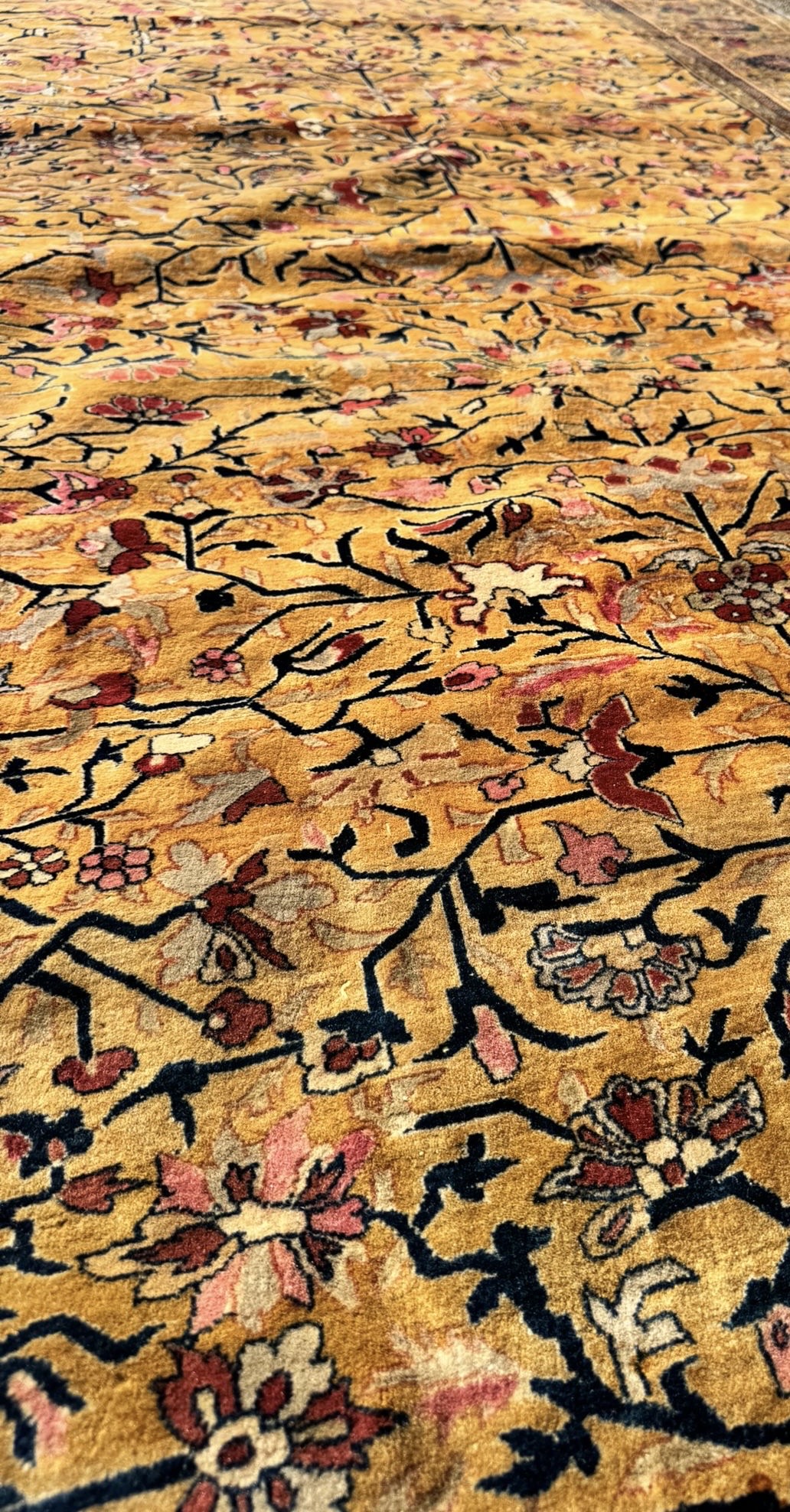
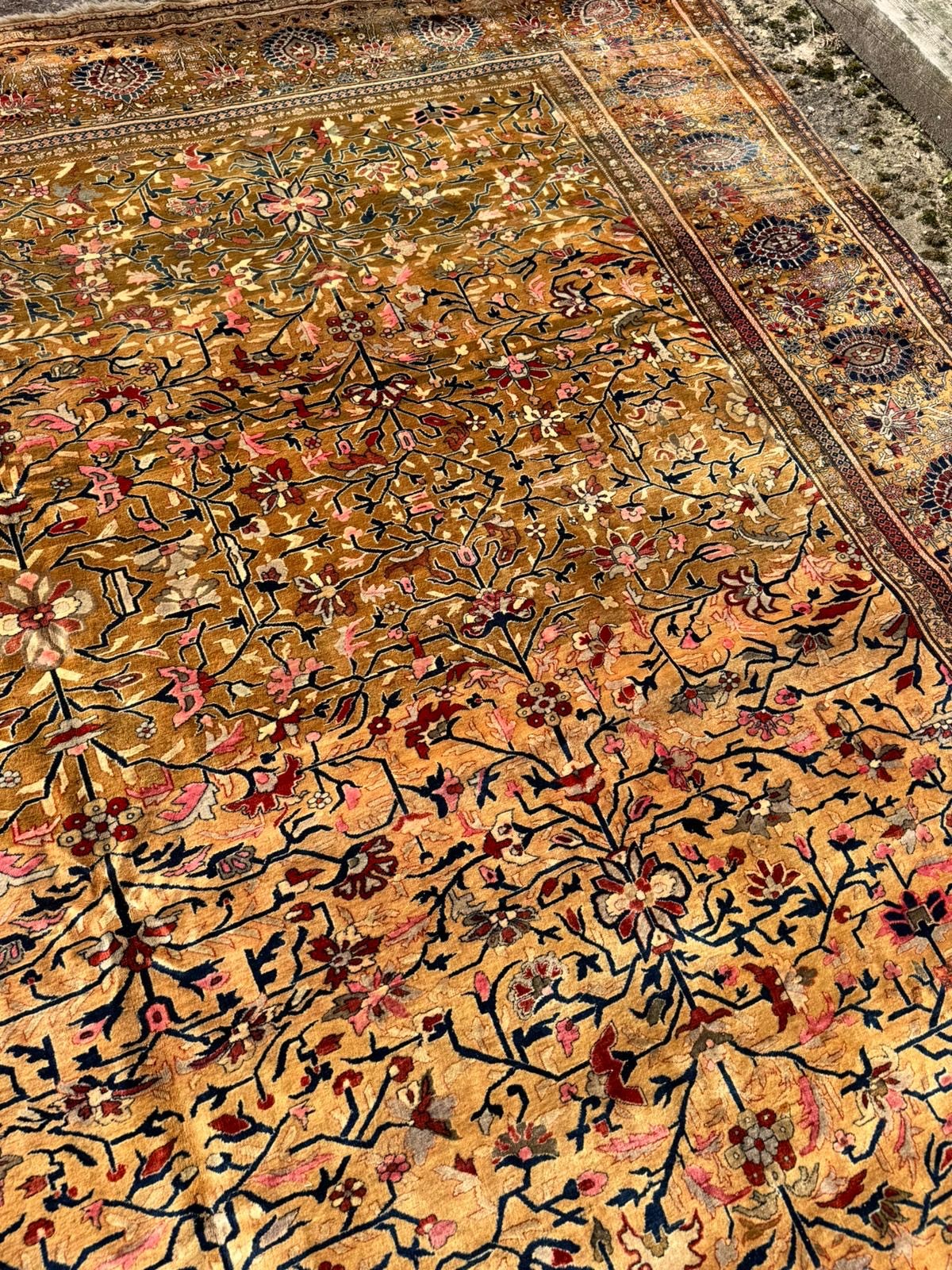
Antique Persian Kashan rug from the Ghazan workshop, with a yellow ground and fine branching floral design
Antique Persian Kashan — Ghazan Workshop

Kashan region, Persia · Kurk lamb’s wool

From our private collection.

An antique Persian rug from the Kashan region, made by the Ghazan workshop, with a delicate floral design across a yellow ground.

The master craftsman. The workshop was established by the Armenian master weaver Ghazan, whose name is also spelled Qazan or Gazan.

Signature material. Ghazan workshop rugs are highly prized by collectors for their exceptional quality. Traditionally finely knotted in soft, lustrous kurk lamb’s wool, they are celebrated for the richness and sheen of their pile.

Identification and workshop details supplied by Shahrokh Tabrizi.

03

More from our private collection

Services

Personal advice

Contact Shahrokh Tabrizi to discuss certificates, valuations and repairs for your carpet.

Certificates & authentication

Contact me to discuss how and where to obtain a certificate documenting your carpet’s identification.

Valuation & estimates

Contact me to discuss an estimate and the purpose of your valuation, whether for a sale, insurance or inheritance.

Repair & restoration

Contact me to discuss your carpet’s condition and where to arrange suitable repair or restoration.

Buying & selling

We buy and sell museum-quality antique carpets. Contact Shahrokh Tabrizi to discuss a carpet you wish to sell or a piece you are looking to acquire.

Start with your carpet

Please send clear photographs of the front, back and any damaged areas, together with the dimensions, your location and the service you need.

Antique carpets for sale

Available from our private collection